
A connector may represent only a small part of a finished product, but an incorrect connector can stop an entire assembly line. For OEMs, electronics manufacturers and electrical equipment businesses, selecting a dependable wire connectors supplier requires attention to technical compatibility and supply consistency.
Delhi has a large component sourcing market, giving buyers numerous options. The challenge is identifying products that actually match the application.
Digitech Sales supports connector and wiring requirements for businesses that need components for production, equipment assembly and related electrical applications.
1. Define the Connector Before Requesting a Quote
Provide more than a photograph whenever possible.
Useful information includes connector type, number of pins, pitch or dimensions, mating requirement, current rating and wire size.
If an existing sample is available, it can help establish the physical configuration.
2. Confirm Electrical Suitability
The connector must support the voltage and current required by the circuit.
Power connectors generally have different priorities from low-current signal connectors. Avoid selecting a smaller connector merely because it saves space if its electrical rating is unsuitable.
3. Check Terminal and Wire Compatibility
The terminal should be designed for the conductor and insulation dimensions being used.
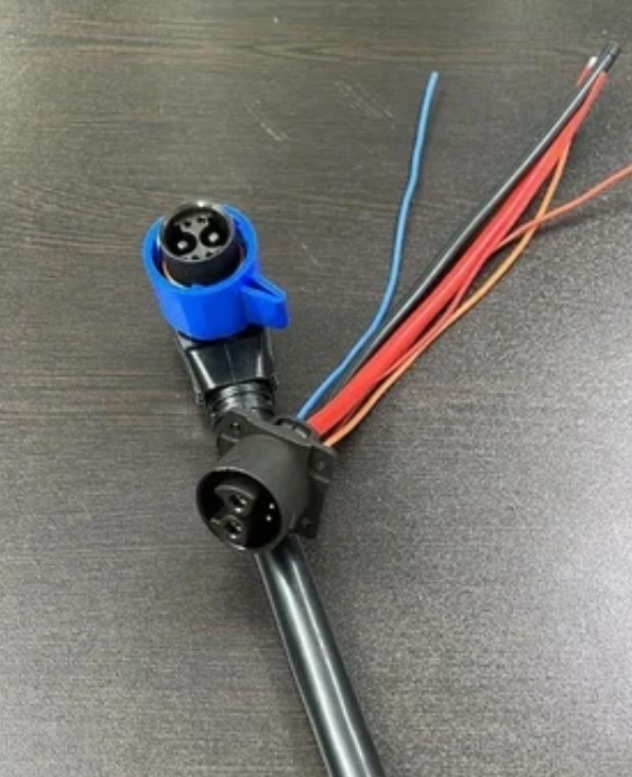
If the supplier is providing an assembled connector with wire, confirm conductor size, wire length and insulation material before approving the sample.
4. Review Mechanical Requirements
Consider how the connector will be used after installation.
Will it experience vibration? Will users disconnect it frequently? Does the equipment need a locking mechanism? Is there sufficient room to release the connector during servicing?
These questions help determine whether the physical design is practical.
5. Assess Custom Assembly Requirements
Many manufacturers do not need loose connectors alone.
They may need pre-cut wires, terminals, silicone wiring, specific pin configurations or connector-to-connector assemblies.
Working with a supplier that can understand such requirements can reduce secondary assembly work.
6. Validate Before Production
Never assume a connector will fit because dimensions appear similar.
Use samples to verify mating, terminal retention, polarity, cable routing and electrical operation inside the actual product.
For multi-pin assemblies, confirm every pin position against the approved drawing.
7. Document the Approved Configuration
Once the connector is validated, record the relevant specification.
This helps purchasing teams avoid accidental substitutions and gives suppliers a clearer reference for repeat orders.
Why Local Supply Can Matter in Delhi
Prototype development and production changes sometimes require quick component evaluation. A Delhi-based sourcing arrangement can make sample coordination and specification discussions more convenient for manufacturers in the city and surrounding NCR industrial areas.
Businesses evaluating wire connectors can share their connector type, wire size, current requirement, pin count and quantity needs with Digitech Sales. A detailed enquiry helps the supplier identify the correct configuration and reduces the risk of ordering components based only on visual similarity.