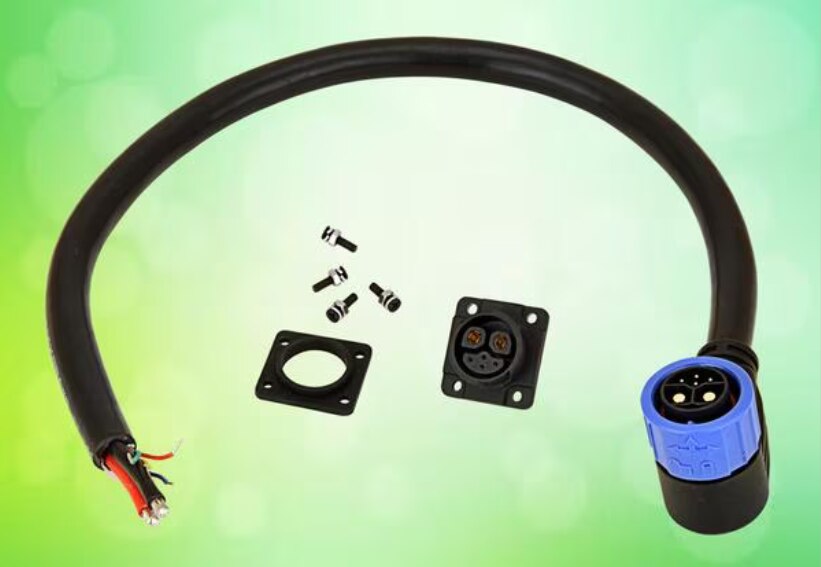
A Chagori set is worth buying only when its pin functions, electrical limits, sealing, locking system and supplied parts match the EV harness you are building. By checking those details instead of relying on the name or moulded appearance, you can decide whether a 2+4, 2+5+1 or Special Chagori version reduces assembly time without adding failure risk.
Key takeaways
- Use a Chagori set where technicians need a keyed, latch-secured service connection.
- Confirm whether the 2+4 layout matches your power and signal circuits.
- Match current, voltage, temperature, sealing and wire-size ratings to the circuit.
- Request mating samples and inspect polarity, terminals, seals and crimp quality before ordering.
When a Chagori set earns its place in an EV harness
Buy a Chagori male-female set when an EV harness needs a repeatable, keyed connection that technicians will mate and unmate during assembly or service. A positive latch prevents accidental separation, while the plug halves give a replacement sub-harness a defined interface instead of forcing technicians to rebuild individual terminals.
It earns its place for jobs such as:
- Connecting a removable battery pack to the vehicle harness.
- Linking a charger inlet or onboard charger sub-harness.
- Joining motor-controller power, auxiliary supply or DC-DC converter wiring.
- Connecting dashboard, sensor and communication branches that need polarity protection.
- Carrying an interlock loop where an open connection must disable operation.
These are the main chagori male female set benefits in delhi: faster harness installation, fewer wiring errors and quicker replacement when a damaged branch returns from the field. They disappear if the connector has no positive latch, permits reversed polarity or uses terminals that loosen during a wire tug.
| Option | Best fit | Main drawback |
|---|---|---|
| Chagori male-female set | Repeated service connections and keyed sub-harnesses | Needs verified current rating, sealing and terminal quality |
| Separate terminals | Permanent joints or very limited space | Slower assembly and greater polarity or insulation risk |
| Terminal block | Fixed panels, test points and multiple branch circuits | Bulky, exposed to loosening and less suitable for vibration |
Choose an ev assembly plug set in delhi only when its installed cost is lower than likely rework and the supplier provides a part number, datasheet, replacement terminals and consistent lots. A cheap copy that merely mates with a sample is not a manufacturing solution.
What the 2+4 pins do—and what the other versions change
Assign the two largest contacts in a 2+4 connector to the positive and negative power path: battery output, charger input, motor-controller supply, or DC-DC input. Use the four smaller contacts for low-current functions such as ignition or enable, charger-detect, battery-temperature sensing, dashboard signals, or a service interlock.
A 2 plus 4 Chagori connector in Delhi is a six-contact arrangement, not a universal pinout. Confirm polarity, keying, contact ratings, and wire-size range before assigning any circuit. Reversing the power pair can destroy a controller; putting a high-current feed through an auxiliary contact can overheat the terminal.
| Version | Contact arrangement | Practical assignment |
|---|---|---|
| 2+4 | Two power contacts plus four auxiliary contacts | DC positive and negative on the power pair; enable, detect, sensing, instrumentation, or interlock on the four auxiliary contacts |
| 2+5+1 | Two power contacts, five auxiliary contacts, and one separate contact | Use the extra auxiliary channel for an additional signal, or reserve the single contact for a dedicated interlock, temperature, or identification circuit only after checking the datasheet |
| Special Chagori | Supplier-defined layout | Treat every cavity as unassigned until the part drawing identifies its function, rating, wire size, and polarity |
The 2+5+1 version does not automatically carry more current; its extra contacts usually add signal capacity. “Special Chagori” identifies a variant, not a standard. Request the exact part number and pin diagram, then mark each wire before crimping.
Combined power and signal wiring saves harness space, but one failed latch, seal, or termination can disable several EV functions at once.
Ratings that decide whether the connector is safe for the circuit
A connector rating must exceed the circuit’s continuous current, peak current, maximum DC voltage and permitted wire size; matching only the physical plug is unsafe.
| Circuit | Ratings to match | Environmental and use checks |
|---|---|---|
| Battery to controller | Continuous and peak current, maximum battery voltage, contact resistance, wire cross-section, insulation rating | Temperature, vibration, dust and water exposure; do not unplug under load unless DC load-breaking is specified |
| Charger input | Charger output current and voltage, inrush current, wire size and contact resistance | Charging temperature range, sealing and mating-cycle test conditions |
| Motor controller wiring | Battery current, peak phase current, maximum DC voltage and cable cross-section | Vibration resistance and terminal retention under vehicle movement |
| DC-DC converter | Input voltage range, continuous input current, fuse rating and wire size | Heat near the converter, insulation temperature and moisture protection |
| Dashboard harness | Signal voltage, auxiliary current, contact resistance and wire cross-section | Dust, condensation, repeated servicing and protection against reversed polarity |
A “2+4” label does not provide these figures. Require separate ratings for the two power contacts and four auxiliary contacts, plus the connector’s maximum DC voltage, insulation rating, contact resistance and temperature range.
Do not treat mating-cycle claims as live-disconnection ratings. DC arcs do not cross zero like AC arcs, so the battery, controller or interlock must remove current before unplugging unless the datasheet explicitly approves the required voltage, current and load-breaking duty.
An IP rating, such as IP54 or IP67, matters only when its test conditions match the vehicle’s exposure.
How to verify fit, polarity, sealing and termination before installation
Reject the set before wiring if the halves lack a positive latch, the keying allows reversed polarity, or a terminal moves during a light pull. A continuity beep cannot reveal a loose contact that fails under vibration.
1. Check the exact part number, pin count, keyway and terminal size against the drawing. Mate the halves by hand; they must seat fully without forcing, leave no visible gap, and produce an audible or tactile latch. Try the wrong orientation. It must not enter far enough to make contact.
2. Mark battery positive, negative, signal return and interlock pins on both halves before termination. Confirm the same pin numbers at each end with a meter, then inspect for crossed power and signal contacts. Never trust housing colour alone.
3. Inspect the mating face and cable entry separately. Fit the specified cavity plugs, cable seals and backshell, then check that each seal is present, undamaged and compressed evenly after mating. An IP rating applies only to that complete tested configuration, not to an open cavity or half-engaged latch.
4. Use the specified wire size, strip length, crimp die and terminal. Reject crimps with cut strands, exposed conductor beyond the barrel or insulation inside the contact area. Pull each terminated wire firmly; the terminal must not back out.
5. Check contact retention and fit with the actual mating terminal, not a sample from another ev assembly plug set in delhi. Record polarity, crimp results, lot number and the final continuity test before installation. Loose insertion force or intermittent readings justify quarantine.
The Delhi buying decision: compare the complete specification, not the catalogue name
Buy a Chagori set for Delhi production when keyed mating, a positive latch, faster harness installation and sub-harness replacement justify its installed cost, and its documented ratings match the circuit. Do not approve it because the catalogue says “Chagori”: that name covers different pin counts, terminals, seals and current capacities.
| Option | Suitable decision | Risk to control |
|---|---|---|
| Complete documented set | Use when the datasheet matches battery, charger, controller or auxiliary wiring | A cheaper substitute may change terminal size or polarity |
| Unidentified catalogue set | Reject for production | No evidence for current, voltage, sealing or lot consistency |
| Terminal block or separate terminals | Use for fixed, accessible wiring where quick disconnection is unnecessary | Slower service and less protection from accidental misconnection |
Your purchase specification should name the exact part number and state:
- Housing material, terminal base metal and plating, continuous and peak current, maximum voltage, contact resistance and insulation rating
- Wire cross-section range, operating-temperature range, sealing level at the cable entry and mating face, and mating-cycle rating
- 2+4, 2+5+1 or Special configuration, keying, latch type, polarity, cavity seals, backshells and approved crimp tooling
- Lot traceability, replacement terminals and seals, and the required datasheet; ask a chagori connector supplier for manufacturers in delhi to state these fields in the quotation
At receiving, compare the part number, pin layout and wire range with the order. Mate both halves until the latch clicks, tug each terminated wire, inspect unused cavities for seals, and reject any set with loose contact, reversible polarity, damaged moulding or no traceable lot.
Digitech Sales is one source to compare against, but the written specification—not the supplier name—must control the purchase.
Related products
 | CONNECTOR Connector Special Chagori Male-Female Set Digitech Sales is a trusted supplier of Connector Special Chagori Male-Female Set. View product → |
 | CONNECTOR Connector 2+4 Chagori Male-Female Set Digitech Sales is a trusted supplier of Connector 2+4 Chagori Male-Female Set. View product → |
Frequently asked questions
When does a Chagori male-female set earn its place in an EV harness?
Use it where technicians need a repeatable, keyed connection that can be mated and unmated during assembly or service. Its latch also helps prevent accidental separation.
What do the 2+4 pins mean on a Chagori connector?
A 2+4 version has two larger contacts for higher-current circuits and four smaller contacts for signal, control or auxiliary wiring. Confirm the contact layout before assigning circuits.
Which ratings decide whether a Chagori connector is safe for an EV circuit?
Check the connector’s voltage, current per contact, temperature range, wire-size range, insulation rating and sealing level. Compare each value with the actual circuit and installation environment.
How should Delhi buyers verify a Chagori set before installation?
Request mating samples, check keying and polarity, inspect the latch and seals, and verify terminal size, crimp compatibility and wire retention before approving a production order.
Related product
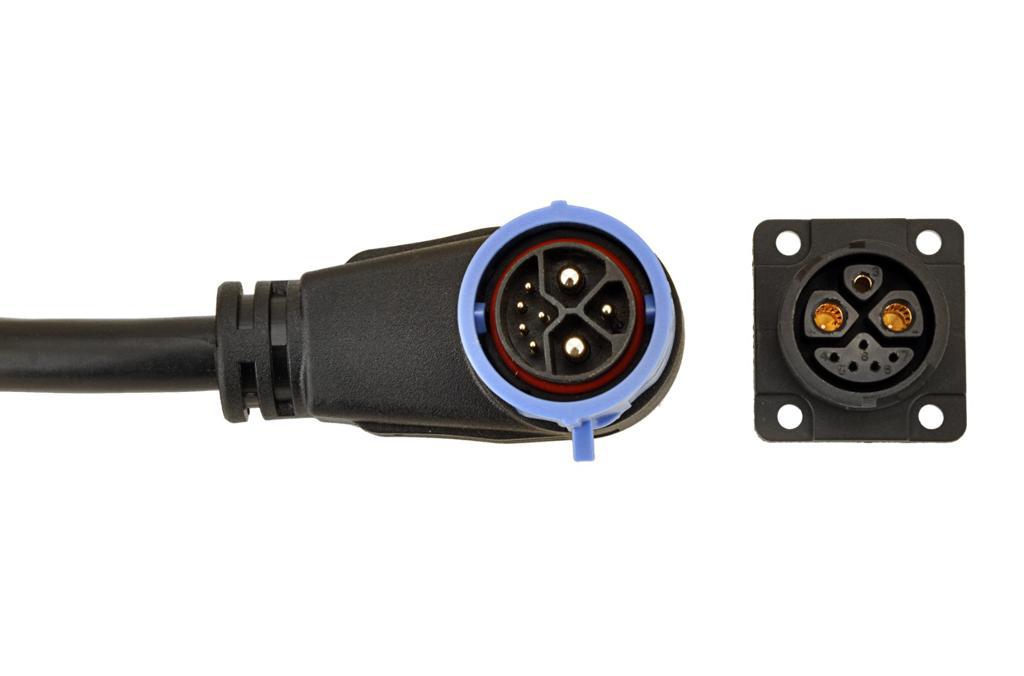 | CONNECTOR The image displays a Chogori-style male and female connector set, commonly used in electric vehicle and industrial applications. View product → |
Keywords